16141 South La Grange Road, Orland Park, IL 60467




Tooth Pain: Is It an Infection or Just “Growing Pains”?
Are you wondering if your tooth pain is a sign of an infection or just temporary discomfort? Tooth pain can be confusing. While it’s common to experience some discomfort in your mouth, determining whether it’s a simple ache from growing teeth or a serious infection can make all the difference in how quickly you seek treatment.
Understanding the cause of your tooth pain is crucial because it helps determine the right course of action. While some tooth pain can be attributed to natural growth processes, such as teething or wisdom teeth coming in, other types of pain can signal something much more serious, like an infection.
In this blog, we’ll explore common causes of tooth pain and how you can identify whether it’s caused by an infection or just growing pains. By the end, you’ll know when to treat the discomfort yourself and when it’s time to see an emergency dentist.
What Causes Tooth Pain?
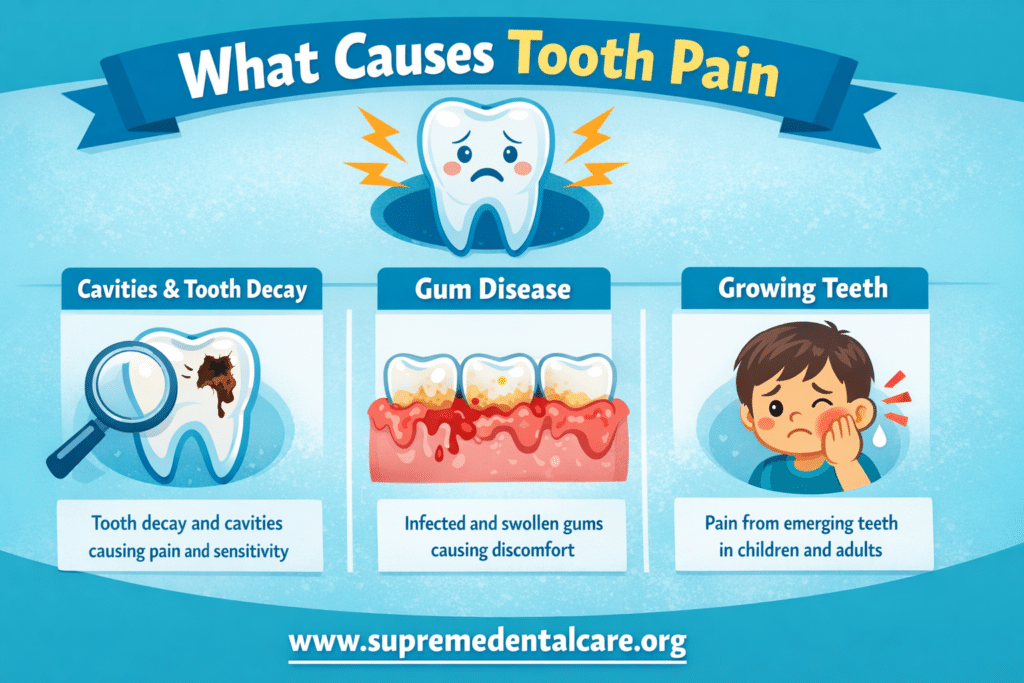
Tooth pain can stem from a variety of causes, each requiring a different approach to treatment. Let’s dive into the most common causes of tooth pain:
- Cavities and Tooth Decay: One of the most common causes of tooth pain, cavities form when plaque builds up on your teeth, breaking down the enamel. If left untreated, this decay can lead to severe pain, especially when the cavity reaches the nerves inside the tooth.
- Gum Disease: Gum disease, whether it’s gingivitis (early-stage gum disease) or periodontitis (advanced gum disease), can cause aching, swelling, and sensitivity around the gums and teeth. Gum disease is typically caused by poor oral hygiene and can lead to tooth pain if not addressed in time.
- Growing Teeth: Growing pains are often associated with teething in children or the eruption of wisdom teeth in adults. For children, the appearance of primary and adult teeth can lead to gum discomfort, which is often described as “growing pains.” Wisdom teeth, the last set of molars, often come in during young adulthood and can cause pressure and aching as they push through the gums.
Growing Pains vs. Infection
It’s important to differentiate between the discomfort caused by natural tooth growth and pain resulting from an infection. While growing pains like teething or the arrival of wisdom teeth are typically mild and can be managed at home, an infection may cause more serious, persistent pain.
Growing pains from teething or wisdom teeth usually cause mild, dull discomfort and may be intermittent. The pain often resolves once the tooth breaks through the gums. However, an infection in the tooth or gums usually causes intense, sharp, and constant pain that doesn’t subside.
Signs Your Tooth Pain May Be an Infection
Source: DxTx
Tooth infections can be serious if left untreated, and recognizing the signs of infection early can help prevent complications. Below are the common signs that your tooth pain might be due to an infection:
- Pain Characteristics: Infections often cause sharp, throbbing pain that is consistent and can be quite severe. Unlike the dull pressure from growing teeth, infection-related pain tends to intensify over time and doesn’t go away on its own.
- Swelling and Redness: If you notice swelling around the affected tooth or in the gums, it could be a sign of infection. The area may also feel warm to the touch, and the surrounding gums may appear red or inflamed.
- Fever and Malaise: An infection in your tooth or gums may cause a fever, as your body fights the bacteria. If you experience a high temperature along with tooth pain, it’s important to seek medical care immediately.
- Bad Breath or Unpleasant Taste: Infected teeth may cause a foul smell or taste in your mouth due to the pus draining from the abscess. If you notice this symptom, it’s a clear sign that you need to see a dentist.
- Tenderness and Pus: If there’s any pus around the tooth or gums, it indicates that an infection is present and is likely draining. Pus is a sign that your body is fighting the infection, and professional treatment is necessary.
Why It’s Serious
Tooth infections can lead to severe complications if not treated quickly. If the infection spreads to the jawbone or other areas of the body, it could result in abscesses or even systemic infections. That’s why it’s important to see an emergency dentist in Orland Park at the first sign of infection. Timely intervention can prevent the infection from spreading and save your tooth.
How to Tell If It’s Just Growing Pains
If you’re experiencing mild tooth pain, it could just be growing pains, which are typically easier to manage. Here’s what you can expect from growing pains and how they differ from an infection:
- Symptoms of Growing Pains: Growing pains caused by teething or wisdom teeth eruption are usually not as severe as an infection. You may experience mild pressure or dull, aching discomfort that comes and goes. This pain is generally not intense and can be managed with home remedies.
- When It’s Likely Not an Infection: Growing pains typically don’t last long. If your pain subsides after a few hours or days and you’re not noticing symptoms like fever, swelling, or pus, it’s likely just growing pains. Additionally, the discomfort will usually be confined to a specific area where the tooth is coming in.
While wisdom teeth can cause some discomfort, the pain generally won’t be accompanied by a fever, swelling, or bad breath. It’s normal for your teeth to shift as new ones emerge, and this often doesn’t require professional treatment unless the discomfort becomes unbearable.
When to See a Dentist
Knowing when to consult a dentist can be challenging, but it’s important to recognize when your tooth pain might be something more serious:
- Prompt Action: If your tooth pain lasts longer than a few days or becomes progressively worse, it’s time to see a dentist. Pain that is sharp, throbbing, or constant is more likely to indicate an infection or other serious issue.
- Emergency Situations: If you notice severe swelling, fever, or the development of an abscess, you should seek immediate dental care. These symptoms suggest an infection, and it’s crucial to treat it right away to avoid complications.
If you are unsure whether your tooth pain is a result of an infection or just growing pains, consulting an emergency dentist in Orland Park can provide peace of mind. At Supreme Dental Care, we offer emergency care to help you get the treatment you need, when you need it.
Treatment Options for Tooth Pain
- At-Home Relief for Growing Pains:
- Warm Saltwater Rinse: Rinsing your mouth with warm salt water can help reduce swelling and clean the affected area.
- Over-the-Counter Pain Relievers: Ibuprofen or acetaminophen can provide temporary relief for mild pain.
- Treatments for Infection:
- Antibiotics: If the pain is due to an infection, antibiotics may be prescribed to help eliminate the bacteria causing the problem.
- Root Canal Therapy: If the infection has reached the tooth pulp, a root canal may be necessary to remove the infected tissue and save the tooth.
- Tooth Extraction: In severe cases, if the tooth is too damaged to be saved, extraction may be required.
- Preventative Care:
- Regular Checkups: To prevent tooth infections and other dental problems, schedule regular checkups with your dentist. Professional cleaning and early intervention can catch issues before they become serious.
- Good Oral Hygiene: Brushing and flossing regularly is key to preventing cavities and gum disease, which can lead to tooth pain.
Tooth pain can be caused by a variety of factors, from growing pains to infections. Recognizing the signs early can help you determine the best course of action. If your tooth pain is severe, persistent, or accompanied by swelling, fever, or pus, it’s time to see a professional.
If you’re unsure about the cause of your tooth pain, don’t hesitate to schedule an appointment with Supreme Dental Care. Our team is ready to provide the care and treatment you need to restore your smile and overall oral health. Contact us today!
People Also Ask
Is it normal to feel discomfort when teeth are growing?
Yes, mild discomfort or pressure is normal when new teeth, such as molars or wisdom teeth, come in. This usually resolves once the tooth breaks through the gum.
What happens if I leave a tooth infection untreated?
If left untreated, a tooth infection can spread to the jawbone or other areas of the body, leading to more severe health complications such as abscesses, tooth loss, or systemic infections.
Can stress cause tooth pain?
Yes, stress can lead to tooth pain, especially if it causes teeth grinding or clenching, which puts pressure on your teeth and jaw, leading to discomfort or even cracked teeth.
How long should tooth pain last before I see a dentist?
If tooth pain lasts more than a few days or becomes progressively worse, it’s time to see a dentist. Prompt attention can help prevent complications from an infection or other underlying issues.


